Welcome to manteasers.com - Dont forget to bookmark us!
How to spot narcissistic traits in a Partner
Learn how to spot narcissistic traits in your partner, from gaslighting to lack of empathy, and recognize the warning signs of an unhealthy relationship today.
Man Teasers
12/15/20255 min read
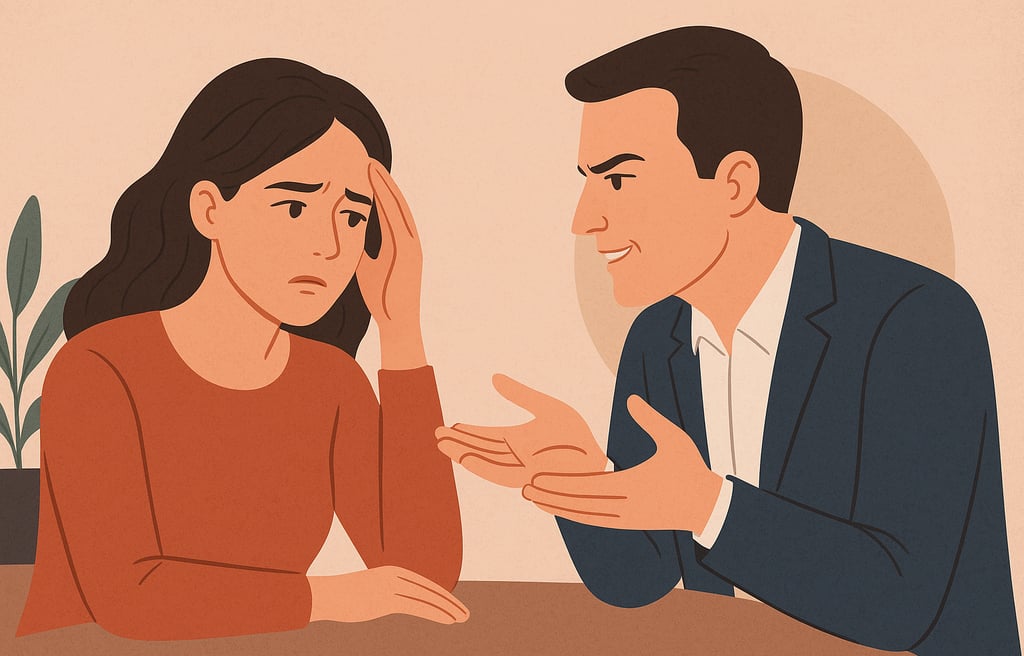
Relationships are supposed to feel safe, supportive, and emotionally nourishing. Even when they’re challenging, there should be a basic sense of mutual respect and care. But when you’re involved with a narcissistic partner, the relationship can slowly become confusing, draining, and emotionally destabilizing — often without you fully realizing why.
Many people stay in relationships with narcissists for years, doubting themselves, walking on eggshells, or blaming themselves for problems that were never theirs to begin with. Narcissism doesn’t always show up as loud arrogance or obvious cruelty. In fact, some narcissists can be charming, generous, attentive, and even vulnerable at first.
This article will help you understand what narcissism really is, how it shows up in romantic relationships, and the key signs that your partner may be a narcissist — so you can see your situation more clearly and decide what’s best for you.
What Is Narcissism, Really?
Narcissism exists on a spectrum. Everyone has some narcissistic traits — confidence, self-focus, wanting admiration — and that’s normal. The problem arises when these traits dominate someone’s personality and interfere with their ability to form healthy, reciprocal relationships.
Clinically, Narcissistic Personality Disorder (NPD) is a diagnosed mental health condition. However, many people exhibit strong narcissistic behaviors without ever being formally diagnosed. For the purpose of relationships, what matters most is how your partner treats you, not whether they meet a diagnostic checklist.
At its core, narcissism is defined by:
A deep need for validation and admiration
A lack of genuine empathy
A fragile self-esteem hidden behind confidence
A tendency to manipulate, control, or dominate others
A narcissistic partner often sees relationships not as partnerships, but as sources of supply — attention, admiration, status, sex, emotional labor, or control.
Why Narcissists Are Hard to Spot at First
One of the most confusing things about narcissistic relationships is how good they feel in the beginning.
Early on, narcissists often:
Shower you with attention and affection
Make you feel uniquely special or “chosen”
Mirror your interests, values, and dreams
Move the relationship forward very quickly
This phase, often called love-bombing, can feel intoxicating. You may think you’ve finally met someone who truly sees you.
But this intense connection is not rooted in real intimacy. It’s a strategy — sometimes conscious, sometimes instinctive — to secure emotional attachment and control. Once the bond is established, the dynamic begins to shift.
Sign #1: Everything Always Comes Back to Them
In a healthy relationship, both partners take turns being heard, supported, and prioritized. With a narcissist, the emotional spotlight almost always points in one direction.
Conversations with them often:
Drift back to their problems, opinions, or achievements
Leave little room for your feelings
End with you comforting them — even when you were the one who needed support
You may notice that when you talk about something important to you, they seem distracted, impatient, or uninterested. But when they want attention, they expect full emotional availability.
Over time, you might stop sharing your inner world altogether because it feels pointless or unsafe.
Sign #2: They Lack Real Empathy (Even If They Pretend)
Narcissists often understand emotions intellectually but struggle with emotional empathy — the ability to genuinely feel concern for others.
They may:
Offer surface-level comfort without real understanding
Minimize or dismiss your pain
Become irritated when you’re upset
Make your struggles about how they are affected
If you’re sick, stressed, grieving, or overwhelmed, a narcissistic partner may initially appear supportive — but quickly grow cold, annoyed, or distant when your emotions require sustained care.
True empathy requires stepping outside oneself. For narcissists, this feels threatening or exhausting.
Sign #3: You Feel Constantly Criticized or “Not Enough”
Subtle criticism is one of the most damaging tools narcissists use.
It may show up as:
“Jokes” at your expense
Backhanded compliments
Comparisons to others
Constant corrections or nitpicking
At first, the criticism may seem small or even helpful. Over time, it chips away at your confidence. You may find yourself trying harder and harder to please them, only to feel like you never quite succeed.
No matter how much you improve, adapt, or sacrifice, the goalposts keep moving.
Sign #4: They Can’t Handle Being Wrong
Narcissists have a deeply fragile ego. Being wrong, criticized, or challenged feels like an attack on their identity.
When confronted, they may:
Deny what happened
Twist the story
Blame you instead
Explode in anger or shut down emotionally
You might notice that arguments never lead to resolution — only exhaustion. Even when they clearly hurt you, apologies (if they happen at all) feel hollow, defensive, or conditional.
In many cases, you end up apologizing just to keep the peace, even when you did nothing wrong.
Sign #5: Gaslighting Becomes a Pattern
Gaslighting is a form of psychological manipulation where someone makes you doubt your own reality.
A narcissistic partner may:
Insist they never said or did something you remember clearly
Tell you you’re “too sensitive” or “imagining things.”
Rewrite events to cast themselves as the victim
Question your memory, judgment, or sanity
Over time, you may start second-guessing yourself constantly. You might rely on them to interpret reality for you, which increases their control and erodes your independence.
Sign #6: The Relationship Feels One-Sided
Healthy relationships involve give and take. Narcissistic relationships feel unbalanced.
You may be the one who:
Makes emotional sacrifices
Adjusts your behavior to avoid conflict
Initiates apologies and repairs
Supports their goals while neglecting your own
When you need something, it’s inconvenient. When they need something, it’s urgent.
This imbalance often leads to burnout, resentment, and emotional numbness.
Sign #7: They Need Constant Admiration
Narcissists rely on external validation to regulate their self-worth.
They may:
Fish for compliments
Become moody or withdrawn if not praised
Get jealous of your success
Seek attention from others (including flirtation or cheating)
If you stop providing admiration — or start asserting your own needs — they may punish you with withdrawal, anger, or criticism.
Sign #8: They Play the Victim
Even when they cause harm, narcissists often position themselves as the injured party.
They may say things like:
“Everyone always abandons me”
“You’re attacking me”
“I can’t do anything right in your eyes”
This tactic shifts responsibility away from them and pressures you to comfort or reassure them — again putting your needs last.
Sign #9: They Struggle With Boundaries
Narcissists often view boundaries as personal rejections.
They may:
Push past your limits
Guilt-trip you for saying no
Punish you for asserting independence
Accuse you of being selfish
You might feel unsafe expressing your needs because it leads to conflict or emotional withdrawal.
Sign #10: You Don’t Feel Like Yourself Anymore
One of the biggest warning signs is internal.
Ask yourself:
Do I feel smaller than I used to?
Am I anxious or on edge around my partner?
Do I avoid bringing things up to prevent conflict?
Have I lost confidence, joy, or self-trust?
Narcissistic relationships often erode identity slowly. You may not notice it happening until you feel disconnected from who you once were.
Why People Stay With Narcissistic Partners
Leaving a narcissistic relationship isn’t easy.
People stay because:
They remember the loving version from the beginning
They hope things will change
They feel responsible for their partner’s emotions
They doubt their own perceptions
They fear being alone
Narcissists are also skilled at alternating affection and cruelty, which creates emotional dependency similar to addiction.
Can a Narcissist Change?
Change is possible only if the narcissist:
Acknowledges their behavior honestly
Takes responsibility without blaming others
Commits to long-term therapy
Shows consistent effort over time
Unfortunately, many narcissists do not seek change because they don’t believe they are the problem.
What to Do If You Think Your Partner Is a Narcissist
If you recognize these patterns:
Trust your experience — not just their words
Educate yourself about narcissistic dynamics
Strengthen your support system outside the relationship
Set firm boundaries and observe their response
Consider therapy for yourself, even if they won’t go
You don’t need a diagnosis to justify protecting your mental and emotional health.
Final Thoughts
Being in a relationship with a narcissist can leave you feeling confused, depleted, and unsure of yourself. The most important thing to remember is this:
Healthy love does not require you to disappear, shrink, or suffer to be worthy of care.
If your relationship consistently leaves you doubting your reality, suppressing your needs, or questioning your worth, it’s worth paying attention — and choosing yourself.
You deserve a relationship built on respect, empathy, and mutual effort — not control, confusion, and emotional survival.
© 2025. All rights reserved.
2608 Westgrove Dr #236, Carrollton, Texas 75006.
Email - info@manteasers.com